
I have lived in Cappadocia all my life, and I have come to think that the food here tells the region's story as well as the landscape does. The volcanic soil, the hot summers and cold winters, and the old habit of storing food in the rock for the winter have all shaped what ends up on the table.
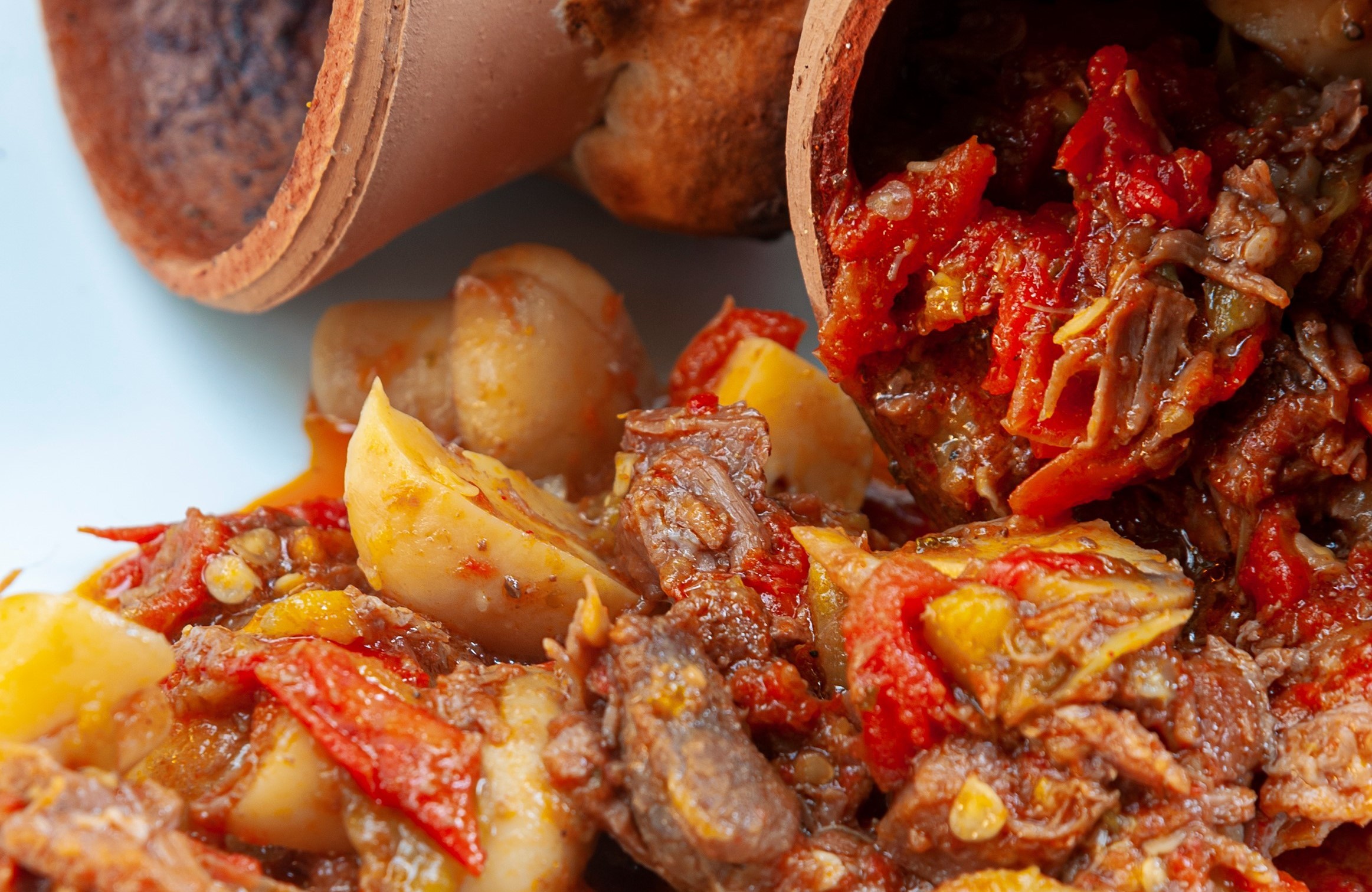
The dish most visitors know is testi kebab, meat and vegetables sealed inside a clay pot and slow-cooked for hours in a wood-fired oven. The pot is brought to your table and cracked open in front of you, often with a short ceremony. It is a meal and a bit of theatre at the same time, and the pots themselves come from the potters of Avanos, who have worked the red clay of the Kizilirmak River for thousands of years.
The same clay pot gives us comlek fasulye, white beans cooked slowly with meat, tomato and peppers. It is simple food, but the long cooking in clay gives it a depth you do not get from a pan.
From neighbouring Kayseri comes manti, tiny handmade dumplings filled with spiced minced meat and served with garlic yogurt, melted butter and red pepper flakes. In Kayseri a bride was once judged by how small she could make them, and many families still make them together for special occasions.
The gardens in the valleys grow tomatoes, peppers, aubergines, pumpkins and apricots. In summer you will find them stuffed, stewed or simply grilled, and in autumn much of the harvest is dried for the winter. Dried apricots and roasted pumpkin seeds are sold everywhere and make a good thing to take home.
Cappadocia has also made wine since Hittite times, and the local grapes, such as Emir for white and Kalecik Karasi and Okuzgozu for red, grow well in the volcanic soil. Several wineries in Urgup and Uchisar offer tastings, and many still age their wine in cellars cut into the rock. The grapes that are not made into wine become pekmez, a thick grape molasses eaten at breakfast with tahini.
For dessert, you will be offered baklava, and during Ramadan gullac, thin layers of starch pastry soaked in sweetened milk and rose water. Both are worth trying, preferably with a glass of Turkish tea.
Eating in Cappadocia is less about restaurants than about hospitality. Whether it is a family-run restaurant in a cave, a village breakfast or a meal at the end of a long day of walking, the best food here is usually the simplest.
Lunch at a local restaurant is included on our day tours, so you will taste some of these dishes along the way. You can see all of our Cappadocia tours here.
Serkan Tosun
Operations Manager, Bellaturca Travel
